
FEELING YOURSELF
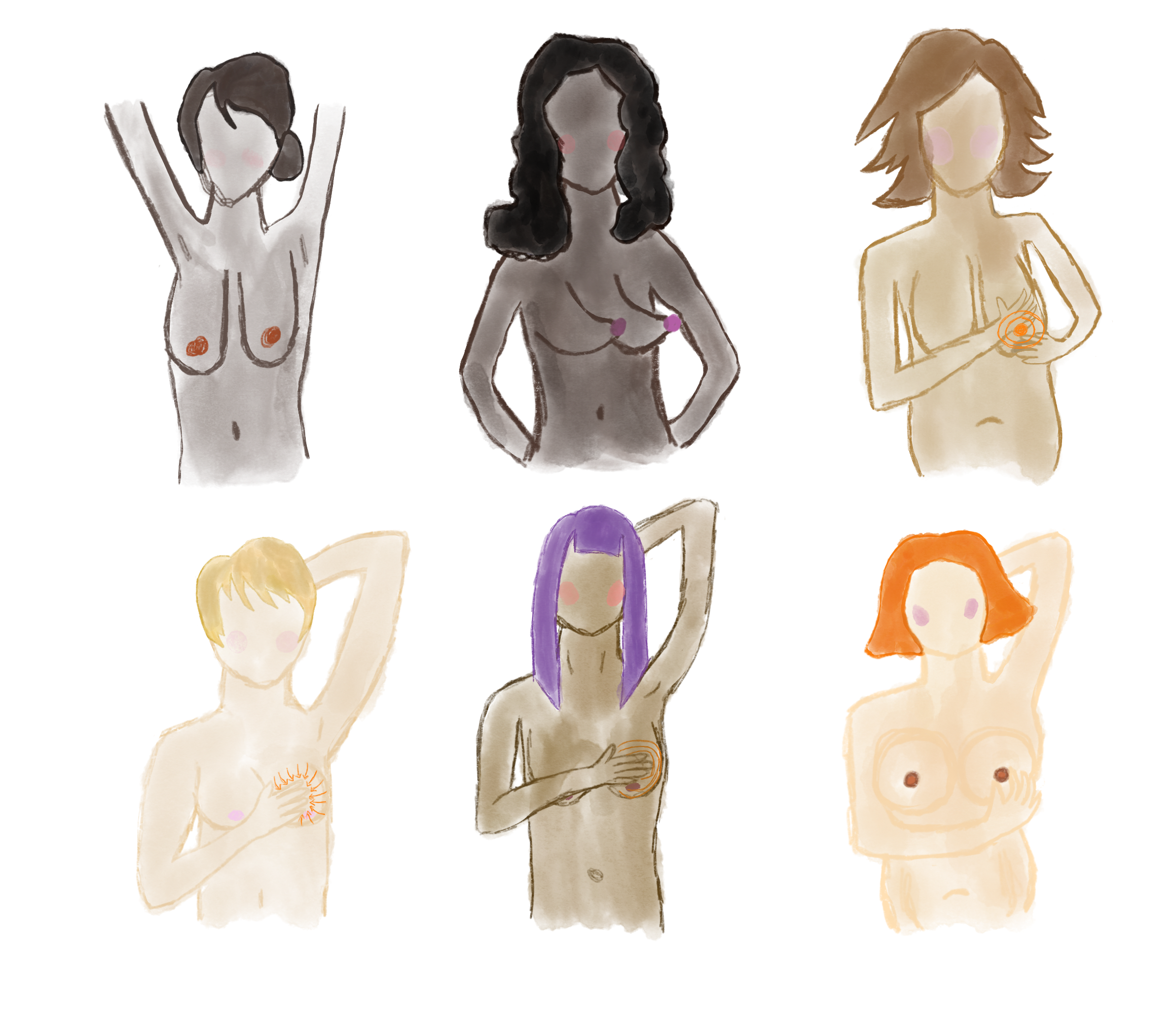
Art by Audrie Malmstrom
Breast cancer is the second most common cancer diagnosed among women in the United States. Yet, everyone is susceptible to breast cancer. Due to growing breast cancer awareness campaigns and funding for breast cancer research, survival rates have increased, according to the Mayo Clinic.
One common way people can detect early signs of breast cancer is through breast self exams (BSE). These exams are designed to help recognize when there is an abnormality in the breast. Understanding how your breasts typically look and feel is essential, and can be life-saving, if a change does occur.
According to the Mayo Clinic, signs and symptoms of breast cancer may include:
A breast lump or thickened area of skin that feels different from the surrounding tissue
A nipple that appears flattened or turned inward
Changes in the color of the breast skin
Change in size, shape or appearance of the breast
Changes to the skin over the breast
Peeling, scaling, flaking or crusting of the skin on the breast
A BSE is to be conducted both visually and physically. For a visual examination, begin in front of a mirror with your shirt off. Raise your arms, scanning for visual differences like changes in breast shape or swelling. Next, do the same thing with your arms down. Finally, place your hands on your hips and squeeze your chest muscles to watch for changes.
For a physical examination, begin by removing your shirt. Use your hand to examine each breast individually. With the pads of your three middle fingers, apply pressure on each part of your breast. Start with light, then medium, then firm pressure. Move your fingers in a circular pattern, so all areas are assessed.
There are numerous ways to go about a BSE. You can even conduct one lying down to even out breast tissue. This makes it easier to detect changes in the breast. For this test, take a pillow and place it under your shoulder. Place your arm behind your head from the same side as your shoulder. With the pads of your three middle fingers, apply pressure on each part of your breast. Start with light, then medium, then firm pressure. Make sure to check all areas, especially around the areola. Switch sides and repeat the process.
It’s important to note that not all lumps are bad lumps. Some individuals naturally have uneven breast tissue, so there isn't always a cause to panic if lumps are detected. For this reason, it’s important to be aware of the normal state of your breasts.
BSEs should be completed once a month, but they’re not the beginning and end of breast cancer awareness. BSEs are not an absolute method to detect breast cancer. It’s still crucial to attend regular breast exams with a primary care provider and screening tests like mammograms. Report abnormalities as soon as possible. Don't wait.