
GETTING PRESSED
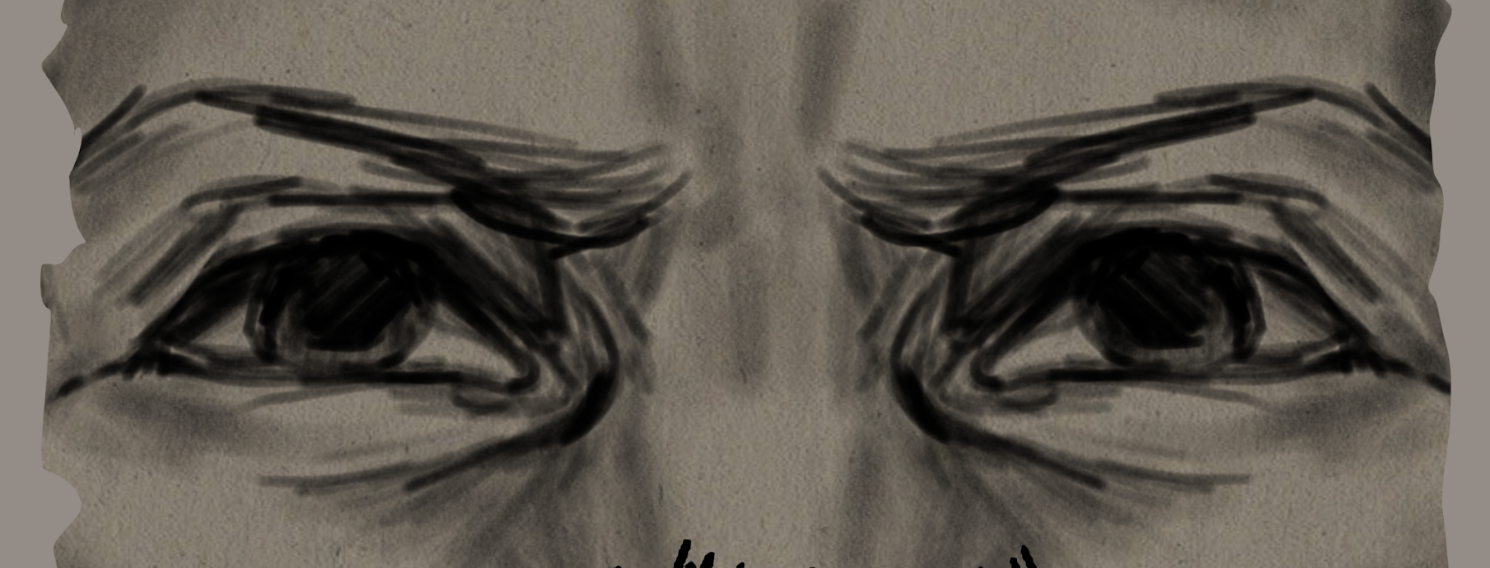
Art by Khloe Scalise
So you want to be a journalist? Cool. The press is under attack, student papers are getting axed and you're $60,000 in debt to the ghost of S.I. Newhouse himself. Let's talk about your future.
Student journalists are on the front lines of a freedom of press crisis they didn’t ask for. Across the country, student publications are losing funding, advisors are being removed and even national news organizations are being censored and restricted.
At Syracuse University, where the S. I. Newhouse School of Public Communications produces some of the country's top journalism graduates, students are watching—and worrying—about what comes next.
The pressure on newsrooms doesn't exist in a vacuum—censorship has become a defining feature of the media landscape under the administration of President Donald Trump.
In October, members of CBS News turned in their Pentagon press passes after a memo stated that the Trump administration would have to approve journalists’ stories before publication, regardless of classification. With journalists fearing retaliation from the administration, some have chosen to quit rather than have their work tampered with.
Roy Gutterman, director of the Tully Center for Free Speech at Newhouse, sees these developments as unprecedented.
"These days, it feels like we are in uncharted territory with attacks on the press, many coming from the very highest people in government," he said. "It is pretty scary."
Howard Polskin, founder of TheRighting, a newsletter that tracks conservative media and collects it for mainstream and progressive audiences, has observed a troubling disconnect. Despite right-wing outlets' claims of supporting free speech and uproars about “cancel culture”, when it comes to press freedom stories, crickets.
"I've detected very little coverage of it. It's been a minor issue," Polskin said.
In October, students working for The Indiana Daily Student (IDS) were shocked to find out they were the latest victim of an ongoing attack on journalism. With a new print issue slated to release by their homecoming football game, staff and students were shocked to discover it was no longer going to print. The paper's advisor, Director of Student Media Jim Rodenbush, had also been fired.
Indiana University’s excuse? The university denied censorship and claimed the issue was pulled due to financial deficits, and that Rodenbush was fired for “a lack of leadership.” However, students and staff including Rodenbush, disagree.
Members of the IDS told The New York Times this was a targeted act, and that there are no protections in place to stop this from happening to other organizations. Gutterman found the incident deeply troubling.
"I never accepted the explanation that the action was not targeting the student newspaper,” Gutterman said. “It's an example of a wider series of attacks or negligence with student newspapers."
Catherine Loper, another professor of journalism at Newhouse, shared Gutterman’s anxiety.
"What concerns me is that you've got a university that teaches journalism asking a student publication not to print news," Loper said. "That's a problem, and it's a problem in the way we're educating the journalists of the future."
While Loper voiced that the issue at IU was a matter of censorship, she is still skeptical that this singular incident is the sign of panic for free press. However, she said when these incidents become cumulative and normalized, it becomes a “crisis situation."
Many students at SU are a part of student publications. For them, the situation at Indiana hit close to home.
Rose Boehm, managing editor of The Daily Orange (D.O.), an independent student newspaper at SU, felt the impact of what happened at the IDS immediately.
“It was obviously scary. It felt like the most direct hit we could take as a network of college newspapers,” she said.
Boehm and the other editors at the D.O. instantly stood in solidarity with the IDS, becoming a part of a network of student publications to do so.
“Right now, college newspapers have a front row seat to higher education and all the changes that have come with this administration,” Boehm said. “To me, that’s one of the most valuable parts of being on a student newspaper right now. We want to stand with each other across the country, trying to cover this tough time.”
SU has long promoted Newhouse as one of the nation's premier journalism schools. But as censorship becomes the norm across American media, some students are asking an uncomfortable question: will SU defend student press freedom, or will it follow Indiana's lead?
Sophomore Grace Elford, a reporter for Citrus TV, worries about possible SU backlash if she were to report on certain university affairs.
"It makes me scared to think that if I found out about something happening and I did release that as news, the university would come after me in some way, whether it be not allowing me to participate in campus media anymore or even taking away my scholarship," Elford said.
Arietta Hallock, editor-in-chief of Baked Magazine, shares similar concerns as she prepares to graduate this spring.
"It's definitely a fraught time in the media,” she said. “It feels like speaking the truth about a powerful person can put you at risk or put you under threat.”
Despite her uncertainty about how SU’s administration may respond to censorship pressures, Hallock finds hope in her professors.
"I know for a fact that individual professors here are incredibly supportive and they care to protect student journalists and continue the legacy here of storytelling and truth,” Hallock said.
Polskin, who came up through the old-school journalism route—grinding his way through at a local paper before landing at a major magazine— doesn't sugarcoat the reality facing graduates. That kind of linear path for aspiring journalists is now rare.
Many current working journalists have been turning to independent media and publishing their writing on Substack, a blog-writing website and app. Polskin, who strayed from mainstream media to write exactly what he wanted, explained the trend’s rise.
"Every time a journalist is fired, a new Substack is born,” Polskin said. That's where they all wash up, on the shores of Substack."
Polskin said nowadays, many journalists have the tools and technology to become their own publishers. However, he noted that for him and other journalists who have already had careers and made money, turning independent works well, but he questions the viability of this option for freshly graduated students.
Still, Polskin has hope for future journalists. He said the skills of content creation will always be needed, and learning those in college is very valuable. He said learning things like video production, podcasting, social media, photography and AI are always going to be needed by someone.
“Now, is that going to be in a journalism career? Maybe, maybe not," Polskin said.
Facing an uncertain future, student journalists still have a path forward according to Gutterman. He offers very straightforward advice: Do your job and make sure you get the story right. Nobody can take legitimate action against a reporter who gets everything right.
Similarly to Gutterman, Loper is also optimistic about the future of journalism.
"I think journalists in this country continue to fight the good fight," Loper said. "As long as we keep pushing for freedom of the press from all angles, and make sure everyone has a voice, it'll be okay."
Student journalists are learning their craft in a country where the president calls them enemies, universities censor them for 'budget reasons,' and the career they're training for is actively disintegrating.
But here's the thing: someone has to tell these stories. Someone has to hold people in power accountable, especially when they really don’t want to be held accountable.
Might as well be us. What else are we going to do, switch to marketing?