
Bring Back Cringe
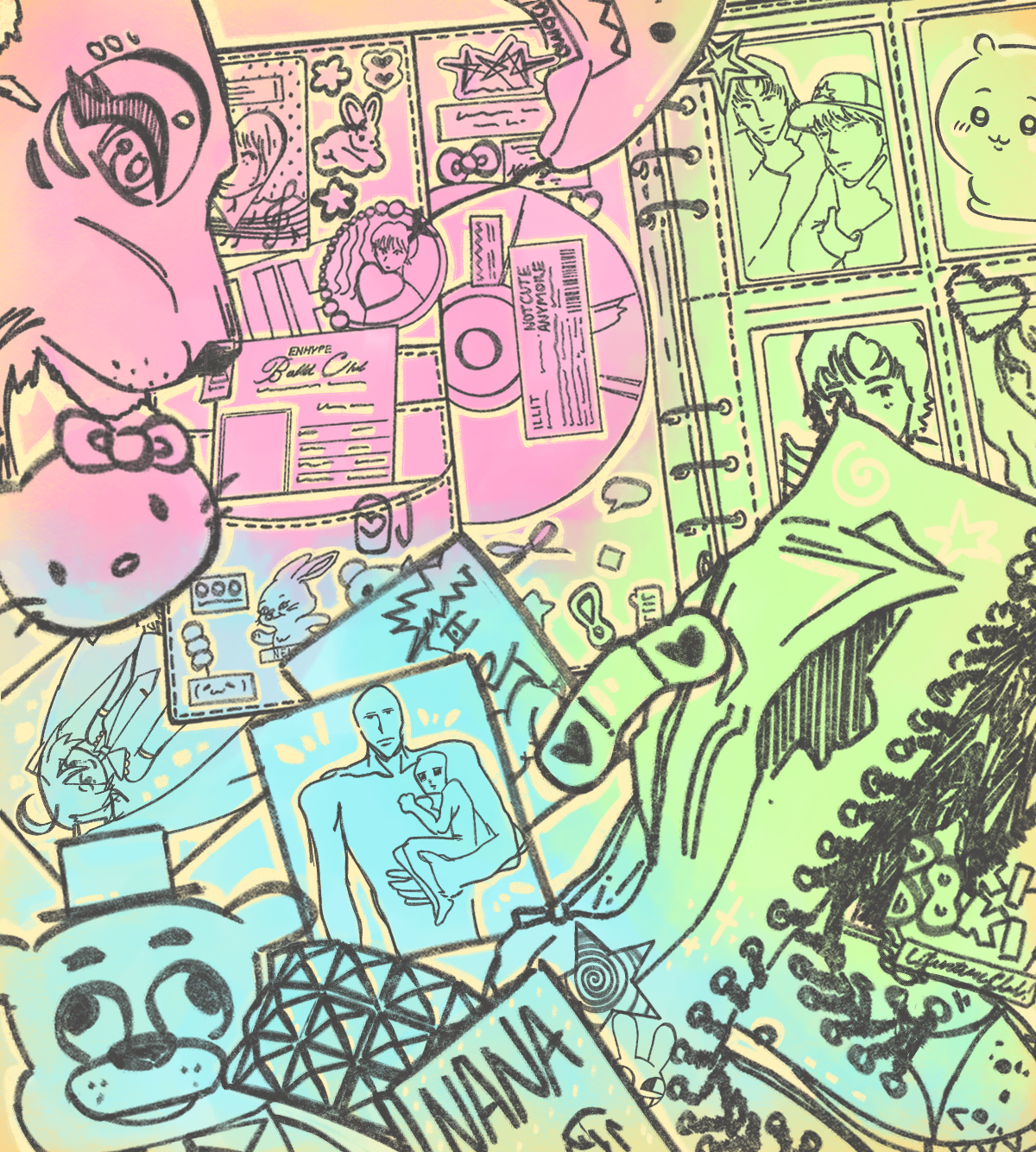
Graphic by Andrea Hernandez
“I am cringe, but I am free.” You’ve probably heard that one a million times. With the new “2026 is the new 2016” trend, we should direct our nostalgia toward the one thing we actually need to bring back from that era: being cringe.
People openly stanned One Direction, wrote fanfiction on Wattpad and made Tumblr fan accounts for their favs. People cared so loudly and proudly. No one pretended otherwise.
Today, everyone wants to be nonchalant or chill or without a care in the world. Why??? What do you get out of seeming not to care about anything at all? Be yourself. Embrace your freaky little interests. Be a weirdo. Stop pretending not to give a gaf. We are in college.
After the mid-2010s, the phenomenon known as “cringe culture” arose, leading to internet users mocking and bullying others for harmless hobbies and interests that may not be perceived as cool, trendy or in style. Rather than encouraging people to care deeply, the internet began rewarding detachment. Passion became embarrassing. Trying became lame. The kind of enthusiasm that was once praised is being met with hateful comments like “go touch grass” or “it’s not that deep.”
Everything is that deep.
Cringe culture has effects far beyond the internet, and even shapes how we move through everyday life. Many young people are afraid to answer a question in class because they don’t want to be perceived as a “tryhard.” They downplay their interests and avoid posting on social media to remain “chill” and “mysterious.”
A February 2024 Hinge report revealed that over half of Gen Z worry about being cringe, and are 50% more likely than millennials to delay responding to a message to avoid seeming too eager. WHO CARES? If you like someone, show it. If you’re excited to talk, act like it. Not caring is boring.
2016 was awesome not only because of the bottle flip challenge and Pokémon Go, but because the internet felt freer. Half of the videos we laughed at on Vine in 2016 would probably end up in “try not to cringe” compilations today. What changed? When did authenticity become so mortifying?
This fear of being cringe isn’t just affecting fandoms and dating culture; it’s even negatively shaping how we react to ambition itself. At the 31st Screen Actors Guild Awards, Timothée Chalamet diverged from the usual humble route and instead declared himself in “pursuit of greatness,” hoping to one day be on the same level as actors like Daniel Day-Lewis and Viola Davis. He was faced with criticism, being called arrogant, tryhard and cringe. I’m gonna keep it real—if you genuinely believe that striving for greatness and knowing your potential is cringe, maybe you’re too uncomfortable with sincerity. We’re so accustomed to indifference that maybe we no longer believe in genuine passion and aspiration.
Be a try-hard. Care too much. Shoot for the stars. You aren’t nonchalant aura farming final boss, you’re miserable. The real embarrassment isn’t being cringe, it’s pretending you don’t care about anything at all. Because you care enough to pretend.