
Resurgence in Student Empowerment Shapes College Experience
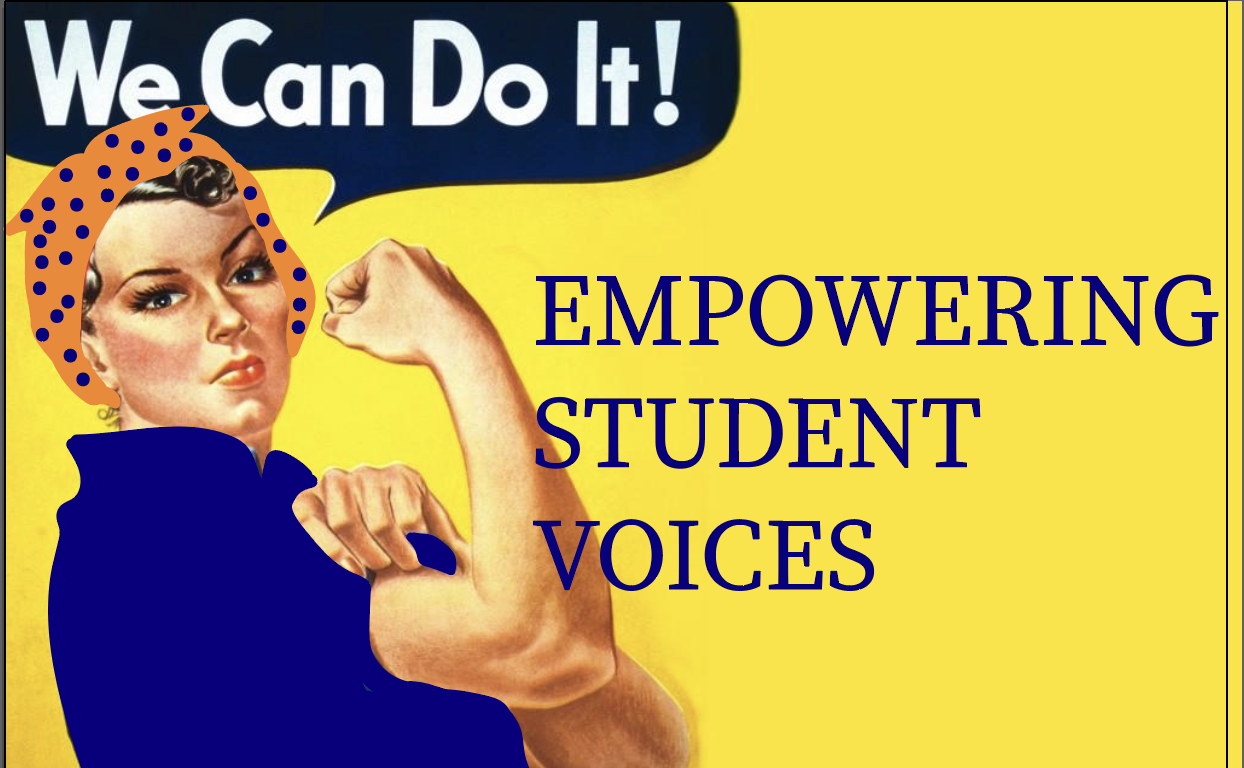
Graphics by Sophie Davis
Students are speaking up more often, organizing faster, and expecting their universities to listen. From policy petitions to social media campaigns, sit-ins, and open letters, student empowerment has clearly entered a new era.
What is driving this resurgence? The short answer is that today’s students are responding to a campus environment that feels more political, more corporate, and more public than ever before.
One of the biggest drivers behind this resurgence is the way students organize. Social media has completely reshaped activism. Platforms like Instagram, TikTok, and Discord allow students to mobilize in real time, share documents or videos instantly, and bring local campus issues into national conversations. A concern that once might have stayed within a student senate meeting can now gain traction and attention across multiple universities in a matter of hours. Movements such as Black Lives Matter showed many students what rapid, networked activism looks like, and how digital pressure can push institutions to respond publicly.
At the same time, students increasingly view universities less as small academic communities and more as powerful institutions. Tuition continues to rise, housing is harder to secure, and many students are deeply aware of how much money flows through their schools. Universities look and operate more like corporations than ever before. Through branding strategies, donor relationships, and public-relations teams shaping decisions. As a result, students are more likely to treat their university as a political and economic actor; one that should be held accountable in the same way as any other major organization.
Earlier student movements in the 1960s also challenged institutional power. The difference now is that students are often less focused on broad ideology and more focused on concrete outcomes: changes to policies, funding, hiring practices, or disciplinary procedures.
Another major factor is how national politics now spill directly into campus life. Debates over race, gender, policing, international conflict, and speech do not stay on the news or online. They appear in classrooms, speaker invitations, student-group programming, and administrative statements. Students increasingly believe that if a university publicly claims certain values, then it should act on those values in its everyday decisions and a wide range of social and cultural issues.
There is also a practical reason today’s student activism looks different: students are more fluent in the language of institutional policy. Many now understand Title IX procedures, bias reporting systems, conduct codes, and diversity statements. Instead of only protesting symbolically, students often cite their school’s own policies and mission statements when demanding change.
Just as important is a generational shift in priorities. For many students, questions of belonging, representation, mental health, and campus climate feel central to the college experience. Issues such as who teaches the curriculum, how cultural organizations are funded, or how incidents of discrimination are handled are not seen as secondary concerns. They are treated as part of whether the university is genuinely safe and inclusive.
At its best, student activism challenges the norm. It pushes administrators to explain decisions more clearly, spend resources more responsibly, and listen to the people most affected by campus policies. Organizing, building coalitions, writing public arguments, negotiating with authority, and sustaining collective action are all skills that extend far beyond graduation.
The real test of student empowerment is not how loudly students can speak, but how effectively campuses can turn that energy into lasting, thoughtful change.