
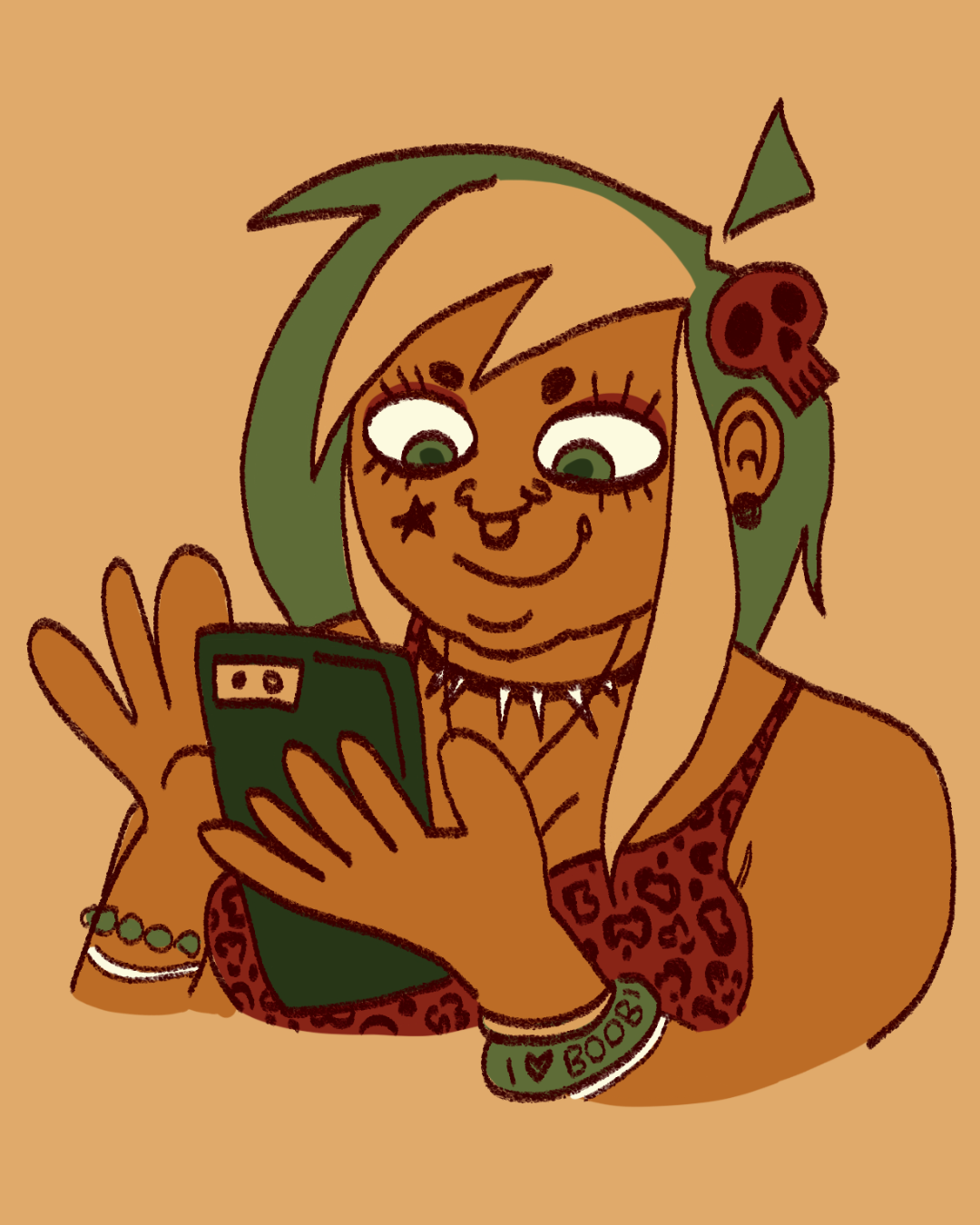
Art by Sarah McConnell
When sophomore Ariam Meseret first DM’ed Eve Chace, her soon-to-be best friend, she felt the pre-college jitters over meeting her new roommate. They met through the Syracuse Class of 2028 Instagram account—a staple for incoming freshmen.
As the two prepared for their first-ever FaceTime, they felt a level of uncertainty about their meeting and how it would set the tone for the rest of the year. Both girls worried that being roommates wouldn’t work out.
“I was definitely nervous,” Meseret said. “I had my friends craft a text with me and everything.”
Chace said she had similar feelings of awkwardness and nervousness when she began messaging over Instagram for the first time. Her vivid sense of humor couldn’t translate across purple bubbles, and they couldn’t express their entire personalities online.
After a few minutes of nervous fidgeting between the two, they managed to break the ice through their shared interests in music and TV shows, as well as adjacent values and political beliefs. They also connected over a natural face-to-face conversation.
“Being able to talk to each other before meeting in person definitely helped the nerves, especially because we were living together,” Chace said. “It’s definitely a little awkward at first, but it threw us right into having a natural conversation.”
By the end of the call, Meseret and Chace felt a little bit better about sharing a room for the next year. Those good feelings continued into the school year, where the two developed their friendship further.
Chace and Meseret aren’t alone in cultivating friendship online—from college roommates to gamers, people have been creating connections through the internet for decades.
The total internet usage in the United States as of 2024 is 96% according to the Pew Research Center, and about 80% of teens have friends online as of 2018.
Pew regards the mid-2010s as the era of peak internet saturation, which many SU students grew up during.
Junior Iris Araki also found her roommate Dora Gordon through the infamous incoming freshman class Instagram page, and from the first conversation they had, both girls knew that they clicked. The two connected over their identities as non-white students at a predominantly white institution. One of their first conversations included how much their identities matter to them, and they still talk about the importance of retaining that part of themselves today. Araki and Gordon both found the friendship building process over the internet comfortable and natural.
“We kind of grew up on the internet anyway,” Araki said.
Incoming SU students have been using social media for at least a decade to find their roommates.
During the COVID-19 pandemic, it was safer for everyone to interact with each other at a distance. Araki highlighted the internet as an especially good way for youth to find a sense of community even when the world shut down.
However, PhD student Ian Glazman- Schillinger, who studies human interactions online, said people have been using computers to build communities with each other for more than 50 years.
“Since the 1970s, when you really start to have the advent of communal and social based communication networks, there have always been people whose primary form of community formation and socialization has been through the computer screen,” Glazman-Schillinger said.
Since then, it has become more and more natural for people to make their friends online. SU students have been using computers as a way to find their future roommates, or even their future friends, for many years now.
“When it comes to finding a roommate, it’s almost so easy or so natural for people to find friends online,” Araki said.