
WHAT THE SIGMA?
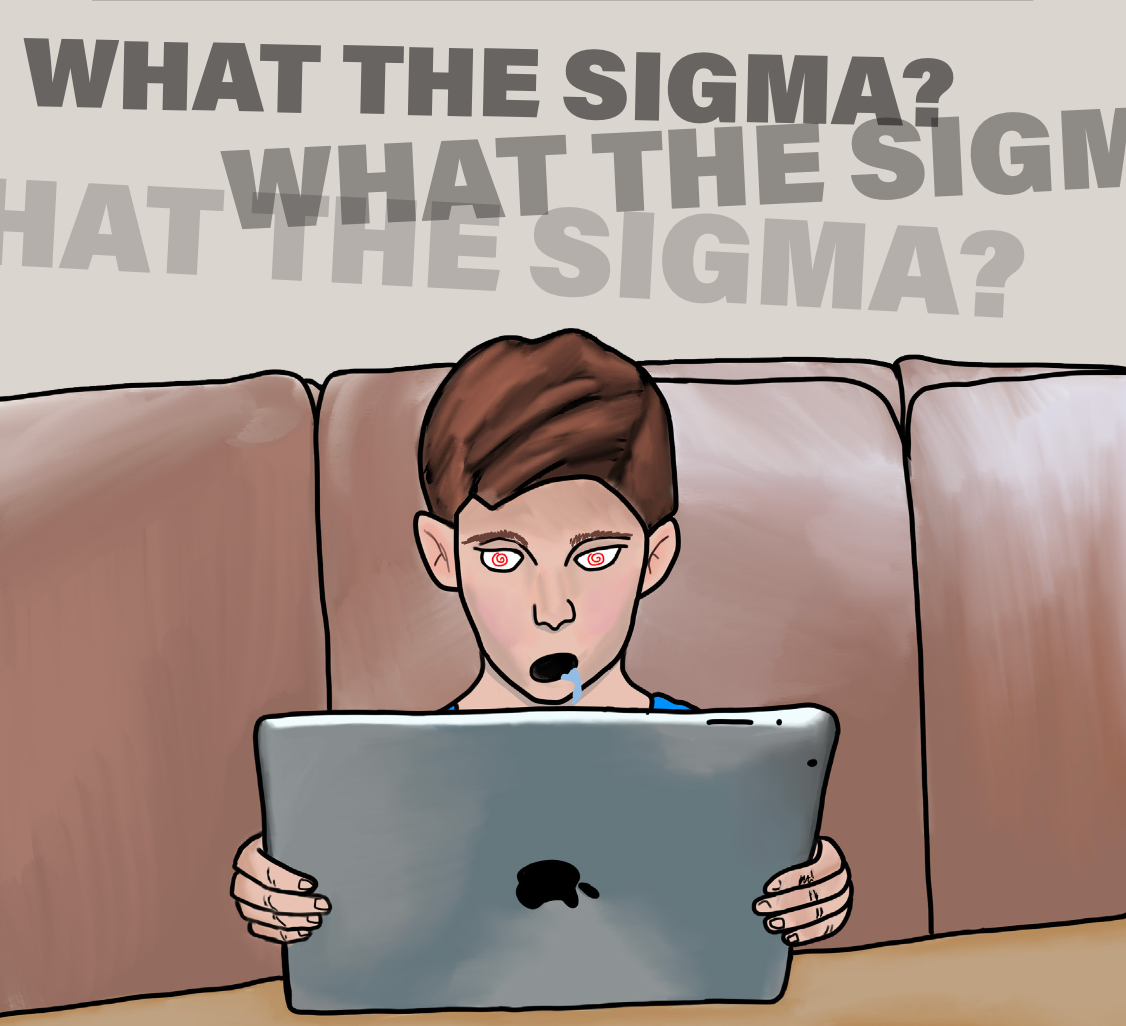
Words by Caroline Erskine
They’re around three to 14 years old, well- versed in terms like “skibidi toilet” and “gyatt” and never more than a few feet away from a device and their headphones.
They’re “iPad kids”—a term of dubious origin to describe Gen Alpha children who gain access to screens at a young age, according to Parents.com. The phrase mainly carries a negative connotation, especially when used by Gen Z.
Stereotypes associated with “iPad kids” tend to include a lack of social skills, rudeness and a general distaste for in-person interactions. Matthew Mulvaney, the undergraduate director for Syracuse University’s human development and family science department, said these stereotypes are credible.
“What iPads do is remove people from social context,” Mulvaney said. “Humans need social MA? context. I think it’s as fundamental as the air we breathe.
Mulvaney argues that it's not the iPads themselves that are harmful, but the essential experiences that they replace. Childhood is the period when we learn essential social scripts: how to recognize when someone is upset, how to navigate boundaries and what happens when you push too far. Through play, children figure out complex human interactions using negotiation and partnership. Kids glued to screens simply aren't getting that experience.
The consequences extend far beyond childhood tantrums in restaurants. Mulvaney, who has been teaching for 20 years, has watched the shift happen in real time. Twenty years ago, Mulvaney’s challenge was getting students to stop talking to each other during class. Now, he walks into a room of 100 students where no one is saying a word.
This isolation has coincided with what Mulvaney describes as “unprecedented” mental health challenges among young people. The iPad kids of 2015 are becoming the chronically online teenagers of 2025, and the patterns established in early childhood are proving difficult to break.
“Young people deal with a lot of hard things, and they've always dealt with a lot of hard things,” Mulvaney said. “But I think the extent to which young people are experiencing substantive mental health challenges is unique to this era of technology.”
But here's where it gets complicated: Mulvaney doesn't believe parents are the villains in this story. In fact, Mulvaney thinks society expects too much from them. He argues parenting should be a source of joy, not a source of stress, and if giving your kid an iPad for a little bit every day helps, it's something you should do.
Kate Quinn, a mother of three, including 9-year- old Edison, echoes this sentiment. She compares screen time to how previous generations sat in front of the television in the 1980s. She argues everything should be in moderation and screens are just the modern version of an age-old parenting tool.
Quinn’s older kids, 15 and 18, didn’t receive their own devices until they were around eight years old, but Edison was given his own iPad at just 3 years old. Now he even has his own phone, but it’s not connected to any services.
“When he gets off the bus, he immediately runs for his phone and he plays Roblox with his friends, or he FaceTimes his grandparents, or he really loves the YouTube shorts now, which are terrible, I honestly think, but whatever,” Quinn said.
However, after this, Edison is cut off from electronics until he finishes his homework and extracurricular activities. Quinn said she normally sets screen time limits, but they aren’t strict. Sometimes, if it’s keeping him happy, she has to bend a little.
“There's a lot of pearl clutching, but I think every generation has been worried about the younger generation,” Quinn said. “If you're just paying attention to what your kids are watching and it’s not all the time, it’ll be okay.”
The issue becomes finding moderation in a world designed to keep us scrolling and ensuring that screen time remains a tool rather than a replacement for the fundamental experiences children need.
Mulvaney predicts a return to play-based childhood, driven by future Gen Z parents. He compares the rise and eventual fall of screens in parenting to smoking cigarettes—while we know they are bad for us, it is only a matter of time before they fade out of our lives.
So, in a world that handed them an iPad before they learned to tie their shoes, the question isn't what's wrong with iPad kids—it's what we're going to do about it.