
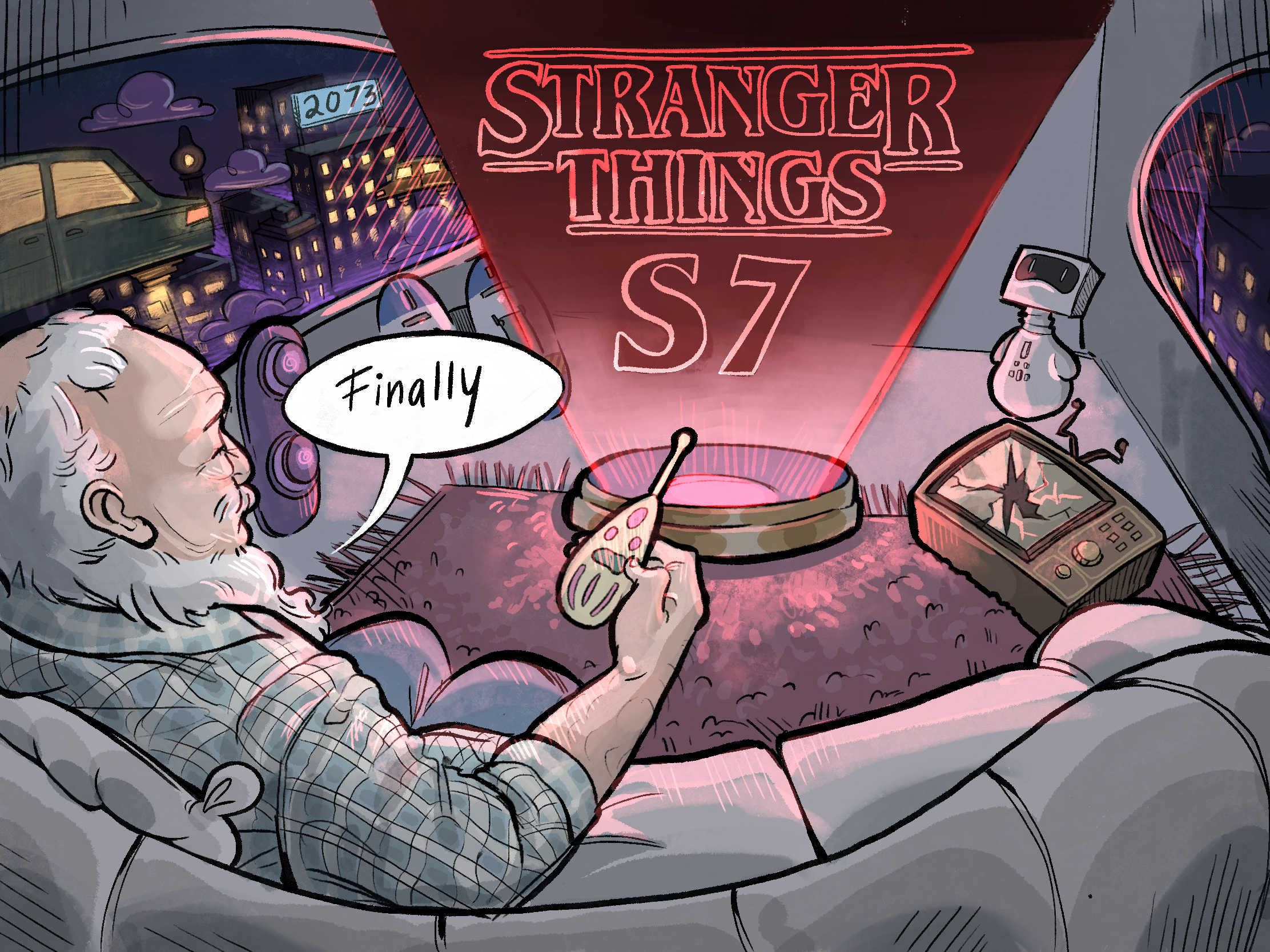
Graphic by Anna McMahon
The rise of TV and the shows that come with it are long standing cultural icons. Since the time your grandpa has been around, television has brought people and culture together in ways no other form of media can accomplish.
Event viewing television dominated the cultural zeitgeist in the ‘70s and ‘80s, with shows like MAS*H and Dallas pulling in viewers by the tens of millions. In that era, there was only one thing on TV, which led to discussions and unity encompassed by one large American monoculture.
In 2026, the television world has irrevocably changed. From satellite, to dish, to cable and now to streaming, television's rapid evolution has negatively impacted the way in which we consume it, have discussions, and wait for the most important moments about the shows we’ve come to love.
Streaming now dominates how Gen Z experiences television. George Winslow from TVTech Magazine puts this change into perspective.
“As the only demographic that exclusively grew up in a cord-cutting world, Gen Z are big consumers of streaming services today,” Winslow said. “Eight in 10 Gen Z-ers watch TV via streaming services. 65% of Gen Z do not have access to a traditional cable TV subscription.”
With Netflix hitting the scene, what it means to watch television became revolutionized. In the early 2010s, Netflix enabled viewers to watch anywhere: from a smart TV, personal computer, gaming console, and mobile device. Before, if you wanted to watch the entirety of your favorite show, you’d have to buy or rent DVD’s. However, due to this boom in access, all the TV shows you wanted were available to watch all at once, right at the click of a button. This innovation led to what’s commonly known now as binging.
Whether it’s The Office, How I Met Your Mother, Breaking Bad, or any show you’re obsessed with, you can lock yourself in a dark room with snacks scattered on your table and sit through hours and hours of episodes, blazing through every season in a matter of days.
While binging can be great for old classics, it’s created a new problem for shows that are or were still in the run of their shows. Instead of the classic weekly episode release common in the age of satellite and cable, some shows on streaming platforms opt to release the new seasons of their show in their entirety.
Popular shows such as Adults, Bojack Horseman, House Of Cards, Squid Game, Big Mouth, Sex Education, End Of The F***ing World and several other acclaimed Emmy-winning shows all have followed suit, dropping their seasons all at once, further leading to watchers binging the shows as quickly as possible.
This type of release schedule creates two massive issues. On a “bingeable drop,” watchers are able to watch the entire season in one sitting. While this may be exciting for those who wait patiently for months, it loses the excitement that comes with having to wait to see what happens next.
What happened to cliffhangers? The dramatic and wild ends of episodes that end with a bang? With a weekly release schedule, fans could wait excitedly all week, wracking their brains over what might happen next, like how the couple's romantic conflict resolves, or whether a characters' big plans come to fruition. With bingeable releases, that delayed gratification is lost, instead all you have to do is slump over to your remote and hit “next episode.”
This binge-ridden landscape also ruins how conversations about the season take place in social circles and online. With shows that release on a weekly schedule, conversation is evenly spaced out between releases, allowing people to digest each episode and its contents as they happen. Each episode was treated as its own separate story, one where fans and viewers could have deeper conversations about the current episode, along with what they might think will happen in the next one.
This is gone with the binge. The season becomes a blur, and while meaningful conversation can still arise, building a community of fans patiently waiting at the same exact time, live tweeting their thoughts and reactions to a weekly live episode creates a much more impactful viewing experience for everyone.
All hope for television is not lost, though. There are still shows that follow weekly releases that cultivate this delayed gratification and worthwhile viewing experience. Some of the most popular and acclaimed dramas of the 2020s like Severance, Euphoria and Succession all followed this formula that kept viewers more tuned-in and created more exciting discourse among fans who kept up week to week.
However, a new and annoying problem has arisen with these shows on streaming: why is the wait between seasons so damn long? It hasn’t always been this way. Viewers of Euphoria and Severance had to wait years for their next seasons to arrive.
This arduous long wait for fans can be attributed from the switch to a yearly network schedule, to arbitrary streaming releases. Former Futurama writer Lew Morton explains why studios are in no rush to get episodes out to viewers.
“Networks/streamers are very slow to order the next season,” Morton said. “Without network schedules, they can be very risk-averse and put off the decision [to make the seasons] for months, and usually do. It’s corporate dilly-dallying. Everyone [in the television industry] you talk to has a story about how they hear ‘we’re going to pick you up, probably next week’ for months.”
This leaves fans fatigued, hungry for their favorite stories to continue. At the interest of large media conglomerates like NBCUniversal, Paramount Skydance, Warner Bros. Discovery and countless others, you, the viewer, are kept waiting for much longer than you deserve.
Jerks, you deserve it all. Every bit of love, drama and everything in between that television gives us brings us closer together. It creates a mirror in which we can see ourselves through the characters we have come to love. So keep on watching, talking and, unfortunately, waiting.