
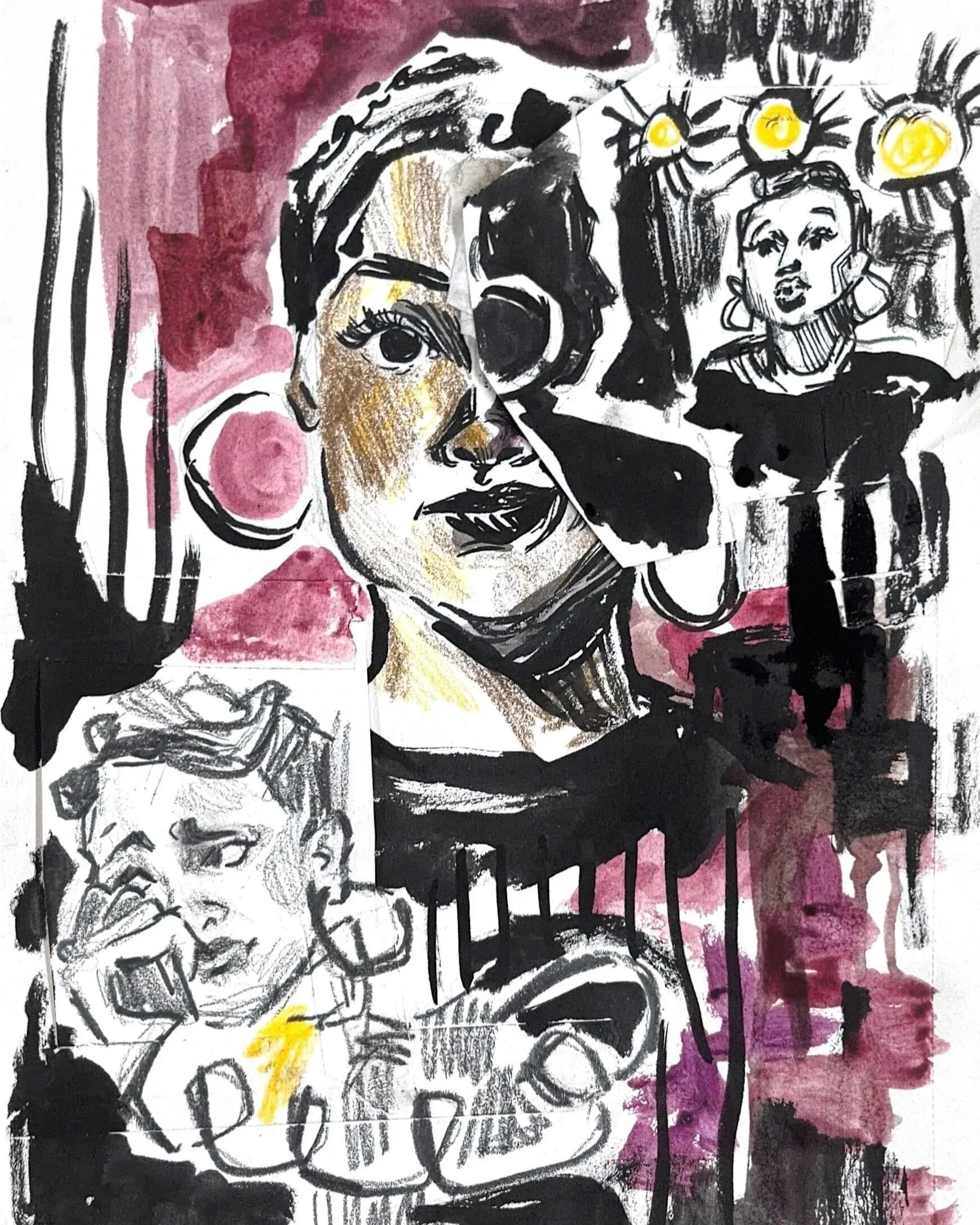
Graphic by Tess Greenberg
“Black women aren’t bitter, we're just tired of settling for less.” That’s one of the first lines we hear 29-year-old Issa Dee say in Insecure's pilot episode “Insecure As Fuck” in a retort to a middle school student. Moments later, she gets laughed at by an entire classroom for her outfit.
Oct. 6 marked the ten-year anniversary of Issa Rae's hit comedy, Insecure. The show centers the life of Issa Dee, a 29-year-old woman who, let’s just say, isn’t exactly where she wants to be in life. Her successful best friend, Molly, is a lawyer, and despite her best efforts, has an unlucky romantic life.
Insecure was not just popular, but considered groundbreaking for its depiction of dark-skinned Black women as the titular characters, and yet was able to resonate with so many audiences.
“The stories were so specific that they felt universal,” Taylor Vaughn Lasley, an assistant professor of television, radio and film at the S.I. Newhouse School of Public Communications said. “That's one of the hardest things to do in Hollywood.”
Besides the experiences of Issa and Molly's lives on the show, the story of Insecure’s creation itself is one that resonated with many creatives. Before becoming the creator of the network television show, Issa Rae was most known for her web series Awkward Black Girl, which largely influenced and inspired Insecure.
“The fact that Issa Rae was able to parlay the success from YouTube, which is a totally self-funded platform, to HBO is just a great story,” Lasley said. “The best story ever,”
The show's strong ties into Rae’s life experiences gave it a sense of relatability that so many shows have struggled to capture. From the setting in Black Los Angeles to the chaotic storylines of Molly and Issa, Insecure not only highlighted a tumultuous—and hilarious—period of young adulthood, but allowed its Black characters to exist as fully fleshed out individuals, while keeping Black womanhood central to the show's identity.
Insecure became not just the culmination of Rae’s life and work, but the validation that stories from young Black creatives matter.
The state of television and film today is very different from Insecure’s time. With many companies rolling back their diversity commitments and the bolstering advent of artificial intelligence, a lot of great art “is just not getting made,” Lasley said.
In spite of rapid changes in the entertainment industry, Lasley hopes that the following years brings a wave of independent Black series like Awkward Black Girl.
“I really think the next Harlem Renaissance is coming,” Lasley said. “There are going to be more Black folks making incredible art, independent art, and distributing it. And I think we're going to see a boom in Black creativity because Black folks don't need approval to keep telling our stories.”