
GOING INTERNATIONAL, INTENTIONALLY
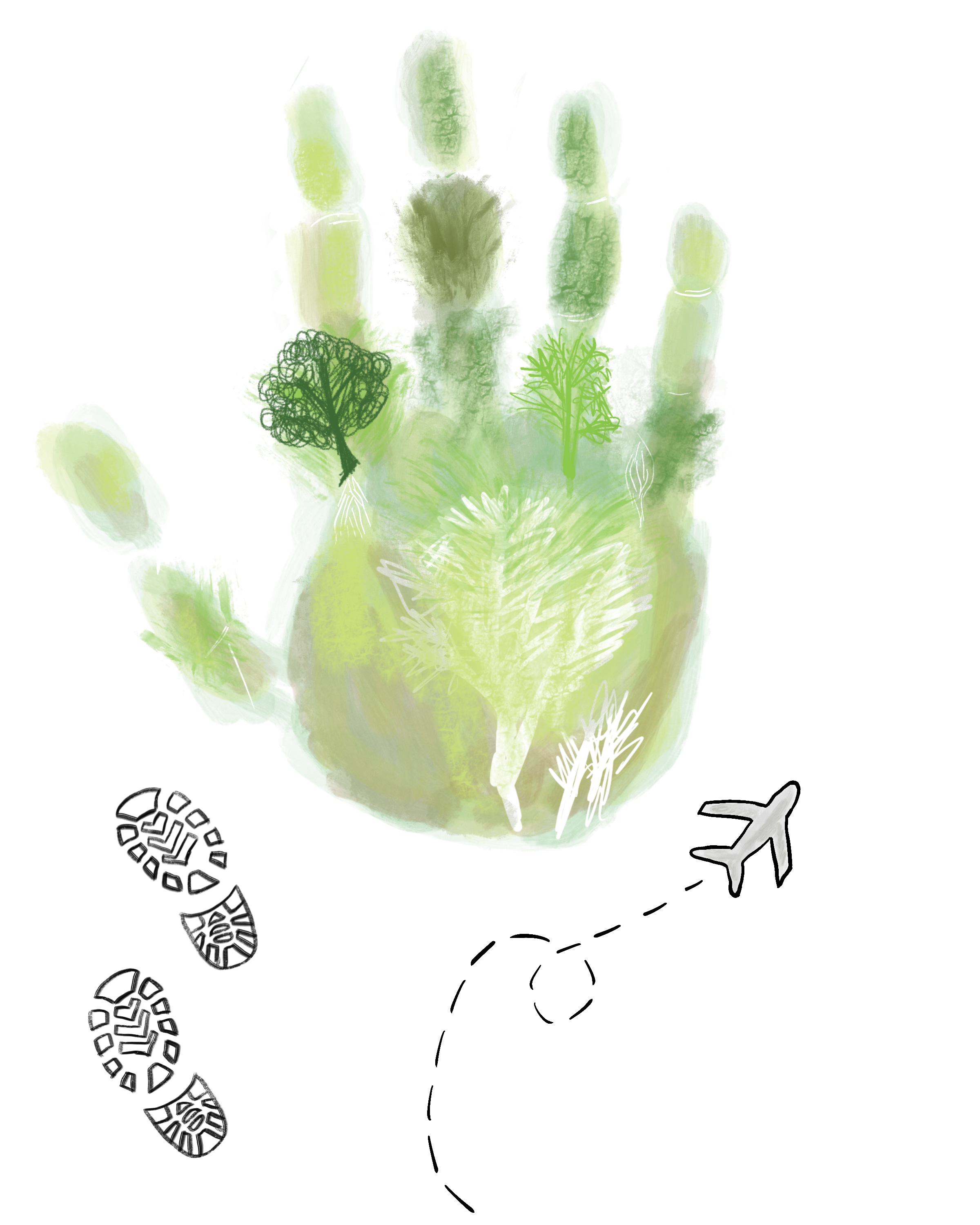
Illustration by Audrie Malmstrom
Whether it be spring break vacations or semesters abroad, traveling is political. Jetsetters may not be looking to consider the social ramifications of what it means to go on vacation when they are just trying to “get away,” but that ignorance creates an issue that needs to be addressed.
Travel is an exchange of cultures that should be viewed as an opportunity to reflect and broaden your own perspective by observing and interacting with others. When people travel to tourist attractions and Instagram hot spots, this takes away from the opportunity to interact with new cultures in an authentic way.
Syracuse University junior Ohemaa Asibuo grew up in Ghana, which has given her a firsthand perspective on how tourism can change the culture of a country. Recently, Ghana has seen an increase in tourists traveling via African Ancestry programs. These programs strive to help African Americans learn more about their specific areas of origin within the continent, drawing thousands of tourists into the country. While these programs have been beneficial to those who wish to connect with their ancestry, they have taken somewhat of an economic toll on the country. Now, because of these increased tourist rates, food prices and other everyday items have skyrocketed. For Asibuo, flights home for break are upwards of $4,000 for a one-way ticket
However, overall Asibuo credits this increased interest in her country as a good thing.
“It has helped put us on the map,” Asibuo said. “People are starting to actually recognize where I am from.”
Timur Hammond, assistant professor of geography at SU, has been traveling to Istanbul for his research over the past decade. Over time, he has seen how the increased presence of tourists has reshaped businesses and made locals feel like “a stranger in their own city.”
“One thing that has transformed the political economy is the rise of coffee shops,” Hammond said. “Because of consumers who are willing to pay top dollar for a cup of coffee, corporate coffee shops have slowly replaced old mom and pop tea shops around the city, which used to sell the traditional drink of the region but now have phased into selling trending products.”
While tourism may be economically damaging and often leads to the commodification of traditions, at its core, travel is a remarkable opportunity. The ability to leave your familiar world and step into the perspective of another is a once-in-a-lifetime experience. Because of the privilege travel holds, it is very important that it is done ethically.
“Because you're forced to see the world from a different point of view, tourism is inherently always going to involve some kind of inequality, whether it's economic or political or social,” Hammond said. “Privilege is necessary to be able to engage in travel.”
Hammond notes that recognizing the privilege to travel is one of the first steps to take when traveling ethically. Additionally, adding humility and modesty to your attitude when traveling to new and exciting locations helps you approach with an open mindset.
Studying abroad is an alternative form of tourism, combining the act of traveling with academic requirements. Going abroad is encouraged for college-aged students across the country as an opportunity to explore not only the world, but the role you play within it. Regardless of why you may be traveling or how long you are traveling for, it is still important to engage in local communities in a respectful manner to maintain their original values and traditions. Wherever you are staying becomes home, and it’s important to treat it as such.
SU’s own abroad office advises students to “be informed about current events, learn about cultural norms and be aware of your surroundings,” on their website.
Syracuse senior Liam De Vos has studied through the university’s summer programs three times. Before studying in Japan, De Vos researched the country’s customs.
“Learning something that may seem like just a little gesture to anyone else, like a bow when saying thank you, actually means so much to [the locals],” De Vos said. “That stuff really helps set you aside as more than a tourist, but as someone who respects them and their culture.”
ho respects them and their culture.” Asibuo also studied abroad in Chile for a semester through SU. “Studying abroad or traveling is really what you make it. Everyone should go out and explore, and that doesn’t necessarily mean going up and talking to strangers, but just trying to keep taking advantage of the unique situation that you are in,” Asibuo said.
So, Jerks, the next time you hop on a plane for your next big trip, go ahead and visit the exotic beaches or historical sites, but be sure not to forget about all the little things that make the place truly special. That way, you’ll gain new understanding and respect for a culture along with every stamp you get on your passport.