
ALGORITHMIC VIBES TUESDAY NIGHT BOTCORE
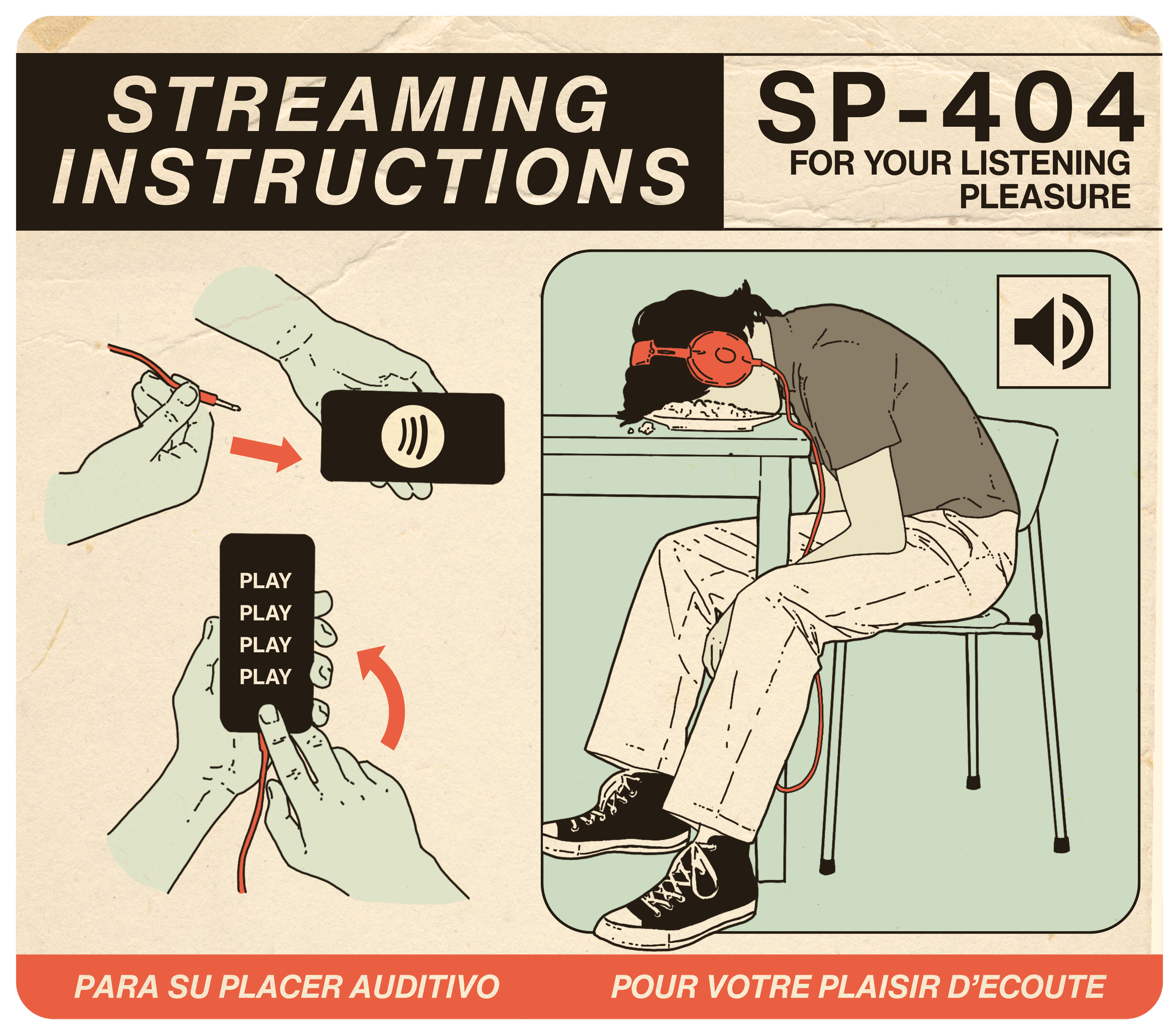
Illustration by Sophia Chen
The largest music streaming platform in the world, with the highest market share in the industry, Spotify is the music lover’s version of a Sex & the City mogul boyfriend. Its charms, ease and sleek appearance are easy to love and hard to look past. The abundance of gifts in the form of personalized mixes, end-of-year “Wrapped” breakdowns of listening activity and an endless library of music convince users that they have no reason to leave.
But, like every toxic relationship, the few extreme highs serve to hide the many poisonous lows. Shoddy business practices, mistreatment of artists and confinement of the user’s musical autonomy are just a few of the reasons we here at Jerk have gone sour on Spotify, and after doing our homework, we’ve found that the issue lies mainly with algorithms.
Until the rise of streaming platforms, the discovery of music was always a deeply social activity that required some modicum of effort. Whether it be taking recommendations from friends, going to the local record store for a browse or reading your favorite music magazine’s review section, discovering music before the age of streaming brought with it emotional investment and connection. True discovery—like going to your local record store and asking the kind but scary-looking man with the soft voice for recommendations—fosters meaningful long-standing relationships with the artists and the work they pour their hearts into.
Today, with Spotify’s prioritization of algorithmically driven recommendation systems, this type of relationship with music has become obsolete and inconvenient. Discovery has gone from unique, on an individual-to-individual basis, to repetitive and mechanical. Data takes precedence. While there is no single, definitive Spotify algorithm, the ones used for algorithmic playlists and song suggestions are most likely based on collaborative filtering. Emerson Rounds, a software engineer, broke down the complicated process of these algorithms into simpler terms.
“You’ve got to consider the raw scope of data Spotify has; for each individual user, it has their playlists, their likes, their search and listening history,” said Rounds. “If 100K other users have the same two songs in a playlist, Spotify will assume that you’re probably gonna want to listen to song B after listening to song A.”
As the app learns from your listening habits and attempts to feed you similar music, it can feel like you’re discovering new songs. In reality, these processes box users in over time and leave them unable to explore beyond the boundaries that Spotify’s algorithm has established. Spotify exposes you to the same music, genres and artists to keep listeners on the app for as long as possible, which, as a business, is the best outcome for them. The more time you spend on the app, the more data about you they'll collect. This will then be used to fuel the algorithm, negotiate deals with record labels for streaming rights and increase the company’s market value.
The issues presented by these types of models don’t exclusively befall users. Smaller artists are also affected, with the algorithm typically favoring larger artists and popular songs, leaving the little guy on the outside looking in when it comes to being discovered by new listeners.
Remember that time last summer when, no matter what kind of music you were listening to, Spotify would always recommend a Sabrina Carpenter song afterward? There are two likely reasons for this. The first one is the structure of recommendation algorithms.
“[The algorithm] can absolutely lead to pigeonholing because songs that are more played generally are going to end up played with more unique songs,” said Rounds, which results in popular songs becoming more favored by the algorithm at the expense of smaller ones by lesser-known artists.
The second reason for the favorability of popular music in the algorithm is Spotify’s Discovery Mode function. In a 2020 article published by the Recording Academy, its authors connect Spotify’s practices to some that have been long outlawed. Payola is the act of paying a radio station to play your songs, which the U.S. Congress made illegal in 1960 to prevent labels from paying to make a song popular.
According to Spotify’s website, “Discovery Mode applies a 30% commission to recording royalties generated from streams in Discovery Mode contexts (Radio and Autoplay), with all other streams remaining commission-free.” This essentially means that artists can pay for the algorithm’s favor by accepting lower royalties on the already practically non-existent income from streams, which is an estimated $0.003 to $0.005 per stream.
While major labels can afford to eat the 30% commission to maintain their algorithmic dominance, smaller artists who are already struggling to make a modest income are forced to give up more to have a chance at competing for recommendation space. Even when they do opt in to Discovery Mode, the algorithm will see that the popular track put out by the major label is performing well and push it even harder, burying the work of independent artists.
"Spotify's promotional royalty rate is yet another example of how the company avoids paying music creators their fair share," said Daryl Friedman, the Recording Academy’s Chief Advocacy Officer. "With Spotify payouts already so low, I don't see how this experiment will benefit any musicians who are already struggling to earn a living wage."
For the readers who decide they want to split from Spotify after learning of their antics, there are plenty of other fish in the sea who will take better care of you and the artists you love.
Angus Kupinas, an artist who makes experimental hip-hop music under the name kgSev, thinks the best method for musical discovery is the most simple one.
“My favorite method for discovering new music is honestly just talking to people, like just asking people straight up,” said Kupinas. “I have friends from all over the place, and everybody listens to different shit, but I feel like that's a pretty obvious answer."
Whether it be listening to the radio, reading music journalism, talking to your friends, visiting your local concert venues or even following the releases of a record label you like, there are an abundance of ways for listeners to discover music to fall in love with. The preceding run-on sentence not only proves that point but is also just the tip of the iceberg.