
The Art of the Video Essay
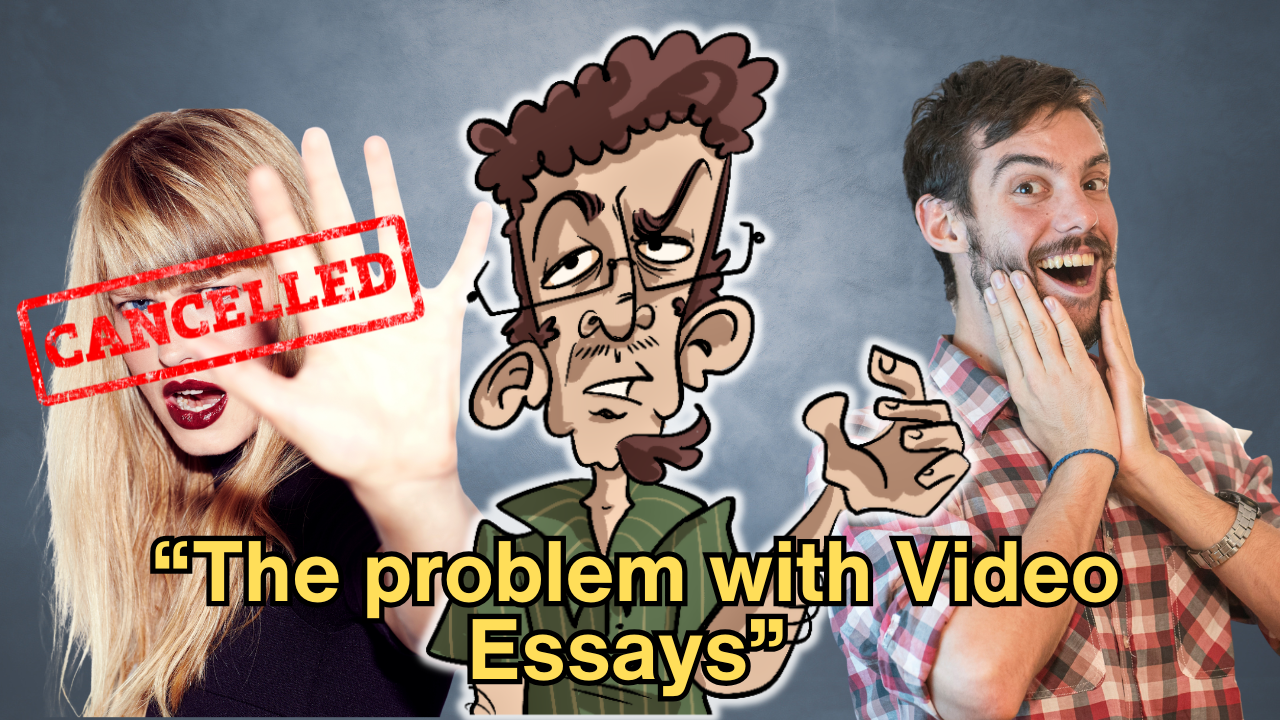
Graphic by Sara McConnell
As a self-proclaimed connoisseur of video essays, I’ve noticed a disturbing trend among my favorite form of long-winded media. Drawn in by their interesting titles and distasteful thumbnails, I’ve been met with nothing but pure disappointment. The quality has plummeted—they’ve been unimaginably bad.
Within contemporary YouTube video essays there’s an unbearable cloud of apathy that is impossible to ignore. Creators are either regurgitating rants from TikTok, snarkily throwing insults at the person or thing of controversy, or simply pointing towards one undefined problem and calling it a day.
All I can think of as I swipe out of said video is: what happened? What happened to citing sources, telling a good story, and above all, creating a compelling argument?
In between the thousands of opinions blurted into our brains through short-form content, we’ve lost the art of creating a damn good video essay.
Here are four things that go into an excellent video essay, and where people go wrong in the process. Think of this as the better, cooler cousin of Elements of Style; Elements of Style but for Video Essays if you will.
TOPIC—Choosing an Interesting Thing
When you go about choosing a topic for your video essay, it’s important that it be actually important to you. Unlike the essays you write for school, you can choose what you put out there, which gives you so much more power as a creator. The best video essays derive from a niche interest. For instance, I love Hbomberguy’s video essay exploring the origin of the Roblox “oof” sound. Does it sound ridiculous? Yes. Is it two hours long? Also, yes. The point is you can make a video essay on anything and make it interesting.
It feels like far too many people create video essays just to create them. If people actually looked at topics they felt something for, their insight would be sharper, the videos themselves more interesting for a viewer actually wanting to learn something. Apathy doesn’t make you “cool,” and acting like you don’t care about what you’re talking about won’t make me care either.
OPINIONATED— Nailing down a thesis
We need to remember that at the end of the day, a video essay is still that: an essay, which entails a thesis; some kind of complete argument an audience can engage with. Without one, your whole video falls apart. Even if you’re not trying to persuade your audience of something, it’s still important to figure out what angle to take in exploring a story. A video essay, at its core, is about your opinion and why your opinion matters.
You need to stand your ground about your topic. Do not just spit out scribbled paragraphs from Substack or attempt to recreate a rant you watched on TikTok. We seem to have created an echo chamber; one where people would rather turn into the morality police and criticize the same things in the same old tired manner rather than attempt to argue something. People need to separate themselves from the echo chamber and think more deeply about how and why they feel about something. More than ever, we are content in simply consuming the next piece of slop or the most digestible version of something, rather than encountering ideas that are actually challenging.
Without defined arguments, our algorithms become an amalgamation of repetitive think pieces with no evidence, Substack articles with no nuance, and video essays that point to an “–ism” without further commentary.
EVIDENCE—Researching to Support your Argument
Great! You have an opinion. Now comes the actual work—research.
This means citing actual, trustworthy sources that help you answer the question, “why should people listen to you?”
It’s easy to simply bring up a reel you watched or a tweet you’ve seen—and I’m not saying they can’t be good launchpads towards more research. However, the large majority of creators have forgotten that research is just as, if not more important than, the claim itself.
Evidence is how opinions are bolstered into arguments. A strong video essay is detailed, because they either have so many findings from reading and watching informative content, or from interviewing or personally investigating their topics themselves.
VISUALS—Make it Look Nice
Alright, you don’t need me to tell you that visuals in a video essay are important.
What makes visuals important is the emotional power it can have on your audience. Many video essays aren’t really focused on a creator’s visual style, but, when it does, it can truly elevate an argument or story to another level.
Some creators may choose to show their faces as to create a connection with an audience (or simply because their face is their brand). Others may choose to go faceless, using editing to make a point instead. Both are valid ways of showcasing one’s idea.
To me, a visually appealing video essay means having a distinct editing style. Mina Le, for instance, borrows much of her aesthetic from vintage fashion magazines and gaudy, theatre imagery, making her videos on fashion, politics, and culture interesting as she melds her talk of the present with designs of the past.
Exemplary video essays to creatively inspire
If you happen to be a future video essayist out there, please take all of this to heart. You might just save my YouTube algorithm.
Here are some of my favorite creators and their video essays. Check out if you have time! In no particular order:
Alexander Avila - Hamilton and the Death of the Obama Era
Broey Deschanel - TikTok Feminism is Not Your Friend
Lily Alexandre - Cinema's First Kiss Was Between Two Women
Lindsay Ellis - The Unforgivable Sin of Ms Rachel
Mina Le - the death of personal style
Hbomberguy - Plagiarism and You(Tube)
Lani’s Lens - Everyone is Hot but No One Is Attractive Anymore...
Farya Faraji & World Musicians - Nolan's Odyssey & The Western View of Greek Culture
EmpLemon - The Everest Discrepancy
Sideways - The Musical Moral of Into The Woods