
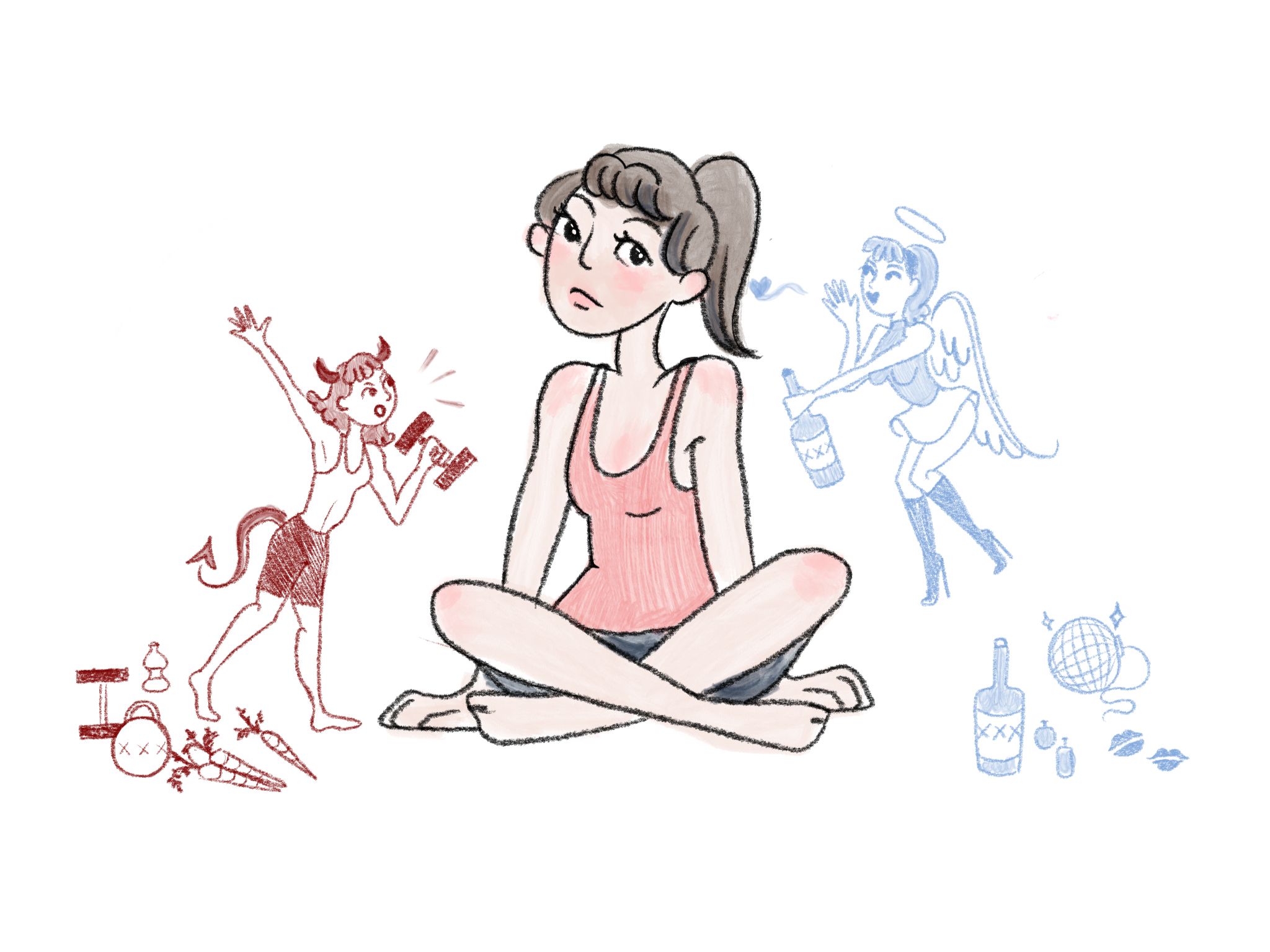
Graphic by Kate Tang
There was once a time when people could be burnt at the stake for drinking alcohol, staying out late or being caught in the sheets with someone they didn’t intend to marry. Society had rules about what was respectable to eat, drink, wear and do with one's body. God forbid anyone enjoyed something deemed “wrong.”
Sounds like a scary reality for someone living in the 1820s, right? WRONG!
It’s just 2026, where you can get the gospel truth from a so-called wellness brand ambassador.
Purity culture originated in evangelical Christian movements promoting sexual abstinence, modest dress and traditional gender roles. Its central belief was that your choices reflected your character. What you did with your body determined whether you were pure or impure, good or bad. Modernity, however, decided that the word purity was a little too on the nose, so it was given a makeover as wellness.
“Don’t drink too much because it’s sinful” became “don’t drink too much because you might get a pimple or have a nip slip in your slutty top.” “Don’t engage with sexual activities or content before marriage because it makes you impure” became “you should be protecting your peace.”
Notice the vocabulary: "clean" eating, "guilt-free" desserts, "detoxes." It's the same moral language with a different filter. See the pattern?
Before anyone starts throwing protein powder in retaliation, choosing not to drink isn’t the problem. Neither is exercising, eating healthy or prioritizing your mental health. The issue is treating these choices as proof of virtue. Since when did every action need to be improved by ourselves? Sometimes growth looks a little less like journaling and more like experiencing hangxiety as your friends recount embarrassing themselves in front of your FYS peers.
College is a breeding ground for such moments, yet parties seem to be taking a hit from this movement.
Syracuse’s Wellness Society, for example, promotes wellness as a social experience. Honestly, that’s great for them; making healthy activities social is hardly a criminal offense. But the idea that a party needs a healthy alternative is a little ironic.
A darty used to mean drinking in the middle of the day, and making a fool of yourself in broad daylight. And that's the beauty of it all! Everyone is too drunk to count their caloric intake of the jungle juice made from vodka and the tears of pledges. And there’s something freeing about being at this point in life when one of your largest concerns is making memories you probably couldn’t tell your parents; why ever take that away? The alternative is a wellness party, which sounds like drinking some Fiji water, or an Alani if you’re feeling adventurous, and the most questionable decision you make is how far you arch your back in downward dog—scandalous!
TikTok has picked up on the absurdity, with the “I don’t know what a wellness darty is, but...” followed by the most atrocious act of biowarfare you’ve ever seen video trend. In that case, has wellness just become a performance? Are these people really taking care of themselves or just trying to show off how they’re living “correctly?”
Taking care of yourself should make you feel better, not make someone else feel worse about themselves.
Unfortunately, purity culture isn’t dead, just yet, so next time you feel guilty for not staying in and doing a face mask after seeing an influencer enjoying their delicious kombucha and almonds, grab that bottle of Pink Whitney, put on your tiniest shirt, and head over to the totally trashy, immoral, unwell darty.