
CAN I GET YOUR BEER BUDDY?
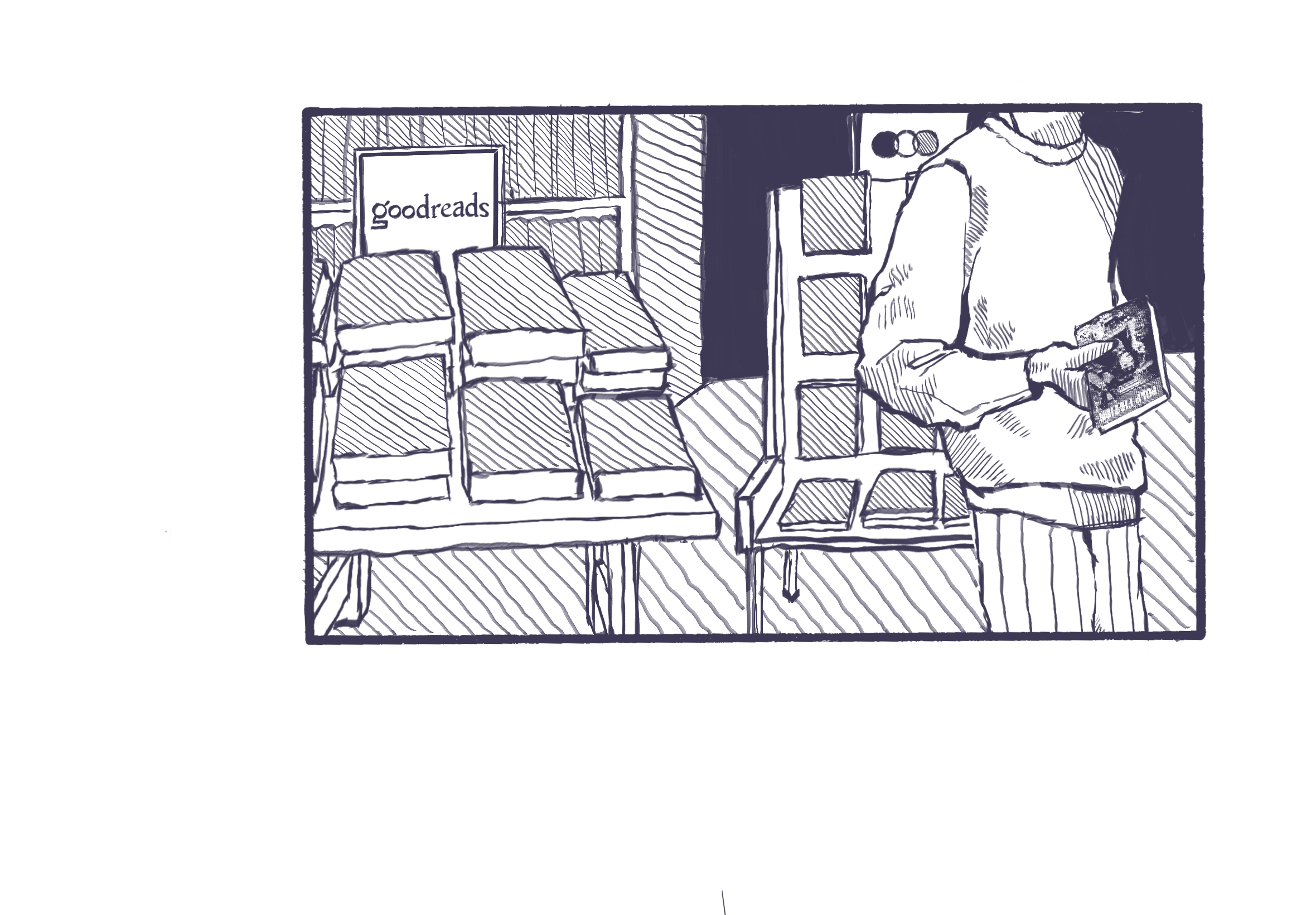
Illustration by Meredith Rogers
We here at Jerk can neither confirm nor deny that on a frigid night many years ago, after a member of our team—who has chosen to remain anonymous to preserve her dignity—was making out with a man who shall also remain nameless, said man took out his phone and logged that he felt “happy and excited” on a new emotion-tracking social media platform called “How We Feel.”
Even more egregiously, when the guy filled out the field asking who he was with at that moment, he selected the option “friend.”
Wow, we hope she eventually channeled all that pain into something beautiful, like a well-received private story post or a 1,200 word feature article on the quantified self years down the line... whoever she is.
As much as Jerk would like to promise that the above anecdote was just a vivid nightmare or a one-off incident, it points to a broader trend of apps that track specific behaviors and consumption habits seeping into our daily lives.
The platforms range from the media-oriented mainstream, like Letterboxd for logging movies and Goodreads for logging books, to the eccentrically crass, such as Beer Buddy for logging beverages and Poop Map for logging, well, poop. It seems like new versions of these hyperspecific apps pop up every week, finding an audience regardless of the specificity of their missions.
A tweet by X user @thisone0verhere reads “A dating app but it's just one picture of someone's bookshelves, one of their usual grocery haul, one of their pets, and one their thermostat.” The tweet has over 1.1 million views and 31,000 likes.
This interest in surrounding oneself with people of similar consumption habits and personal tastes is far from new. Since the founding of Goodreads in 2007, the past two decades have led to an even greater onslaught in what present-day technological philosophers refer to as the “quantified self,” or the idea of using technology to gain as much personal data as possible, in an effort to achieve a healthier or more productive life. With so much access to information about ourselves, it’s human nature to want to know this much about others.
But, does any of this actually work? Has anyone ever met their soulmate through the top Spotify artists feature on Tinder, or is it just a catalyst for mansplained lectures on Nirvana?
Syracuse University junior Tara Binte Sharil might have the answer. Sitting beneath Friends and Paul McCartney posters, she told Jerk about how she first downloaded Letterboxd in seventh grade and has since grown disillusioned with the social side of the app. For Sharil, curated top four movie lists and an increase in one-liner reviews—as opposed to actual film analysis—has led to greater segmentation among users and a loss of the exploration she first downloaded the app for.
“It definitely does create an echo chamber,” Sharil said. “I have specific genres that I like, but I’m also trying to expand what I watch.”
Now, she tries to use the app more as a personal tracker than as an indicator of status as a movie buff. For Sharil, having conversations about film offline makes her feel less limited and more focused on the actual quality of the films.
“If it’s less digitized and we’re more in a space where we can talk about movies in person, we’re able to expand what we watch and have conversations,” Sharil said.
Sharil cited her friend Joel Pelachik—whose Letterboxd top four consists of Goodfellas, The Shining, Oppenheimer and Interstellar—as an example. She admits that the film bro-y line up might have caused her to write Pelachik off had she only known him through his profile. Luckily, the two first talked about movies offline.
“He turned out to be a really great person and a really great friend. He has a great taste profile,” Sharil said.
A few days later, Pelachik, a junior at SU, excitedly gushed to Jerk about seeing Interstellar in 80 millimeter last summer and was thrilled to hear that his interviewer had seen Borat. He was willing to admit to his film bro tendencies. But, like Sharil, he assured Jerk that there’s more to his taste than his Letterboxd suggests.
When asked if he’d be friends with Sharil based on her Letterboxd profile alone, he felt similarly.
“I wouldn’t dislike her, but I don’t know if we’d be super tight,” Pelachik said. “We’ve had some great conversations, even about stuff we didn’t agree with.”
If these hyperspecific, hypercurated apps are stifling actual connection on these topics, why is everybody still sipping on Beer Buddy and scrobbling on Last.fm?
Sarah Appedu, a Ph.D. candidate in SU’s School of Information Studies (iSchool) traces a focus on these contained platforms for topics like beer, books and music back to the dawn of personal computing. In the 1960s, programmers had to understand each tiny segment of code individually before exploring how they impacted one another. In the digital age, we have come to understand each other in a similar way—separating our interests and affinities into neat little packages.
More broadly, questions about how much we are entitled to know about each other—and how much companies are entitled to know about us—date back to the Enlightenment, according to Appedu.
“‘What does it mean to have privacy?’ is something we’ve wrestled with for a long time,” Appedu said. “But these technologies are new and are introducing some really important new problems.”
At face value, it might seem harmless or even beneficial to log all the movies you watch or keep close track of your musical rotation.
“A lot of what we’re seeing with this increase of these data-driven tools is around this belief that the more data we get, the better society will be,” Appedu said. “But then there’s this question of if these companies have all the data, is it really helping us and society, or is it just helping these companies with whatever it is they’re trying to do?”
For SU senior Braden Kletz, niche tracking apps like Beer Buddy and Letterboxd aren’t so much insidious as they are superfluous and slightly amusing.
“Over the summer I was at a friend’s birthday get together and I had never heard of Beer Buddy and I just thought it was really dumb,” Kletz said. He may not be a fan, but less-than-upfront data collection practices aren’t necessarily what dissuade Kletz from using these apps.
“It’s awful—the predatory nature of selling this data to insurance—but I think whatever is out there is out there. That isn't necessarily a deterrent for me,” Kletz said.
When Appedu teaches IST 343: Data and Society, though, she warns students that even seemingly unassuming information can be useful to companies seeking out personal data. The movie you watched on a random Wednesday in your dorm might not seem that telling of who you are, but when merged with another piece of data— like what drink you had later that night or what music you were listening to earlier that day—it could provide companies with a clearer picture of you as a consumer.
“When it comes to health self-tracking, the ethical implications are really obvious, but when you think about something like tracking your beer intake or your movie watching, it doesn’t seem as consequential,” Appedu said. “But in this data-fied type of platform, it can have similar consequences to even something like our medical data.”
Appedu also warns that too much focus on data from tracking apps can cause users to prioritize numbers and overlook the broader context of their data.
“It can cause us to overlook things that can’t be data-fied, like our emotions, and our relationships and our internal experience,” Appedu said.
Nadia Odunayo always liked tracking things, so much so that she created a companion app to Goodreads as a personal side project in 2019. That project has since evolved into The Storygraph, an Amazon-free alternative to Goodreads that fills the human-sized gap that data often fails to address. The app suggests books to users depending on their mood, allows them to record thoughts in a reading journal and live react to books without spoiling them for their followers.
“I remember having this vision of being like, ‘Wouldn’t it be so awesome if you had this best friend that knew everything about you and your preferences and your current mood, but also knew about all the books in the world?’" Odunayo said.
Now, her ultimate goal is to address data privacy concerns like Appedu’s while facilitating exploration and connections like Sharil and Pelachik’s
“Something that I’ve always been wary of is brainlessly following recommendations by tech,” Odunayo said. “I was wary of building an app that just used tech to say ‘read this next, read this next,’ because then we just lose our agency."
Odunayo and the Storygraph team maintain users’ trust by asking them to complete surveys to decide what they want to read next—as opposed to outright telling them—as well as using their own private AI model to learn readers’ tastes without the risk of that data being shared with other companies.
“It’s about striking that balance between making the user feel safe, protecting the user’s data, but still trying to give this personalized experience,” Odunayo said.
So, next time you log onto the newest niche social media platform to track and check up on everyone’s sneeze count, free snack consumption activity or podcast listening stats—consider whether or not these activities are making you feel more connected with yourself and others. And if you’re going to inadvertently skirt around the “what are we?” conversation by logging the answer in a mental health tracking app, maybe just turn off your location settings first.