
LOST IN TRANSLATION

Illustrations by Julia English
“Inat” – Serbian
"Doing something because it was said you couldn't do it" is how Marko Ljuboja, a native Serbian speaker, explained the word inat. It’s a word that most closely resembles "spite," but means far more. The word has Ottoman Turkish origins, the result of nearly 500 years of occupation. "Inat is deeply tied to the cultural identity of Serbia," Ljuboja said. "A long history of oppression—and then that just carries over into their identity now."
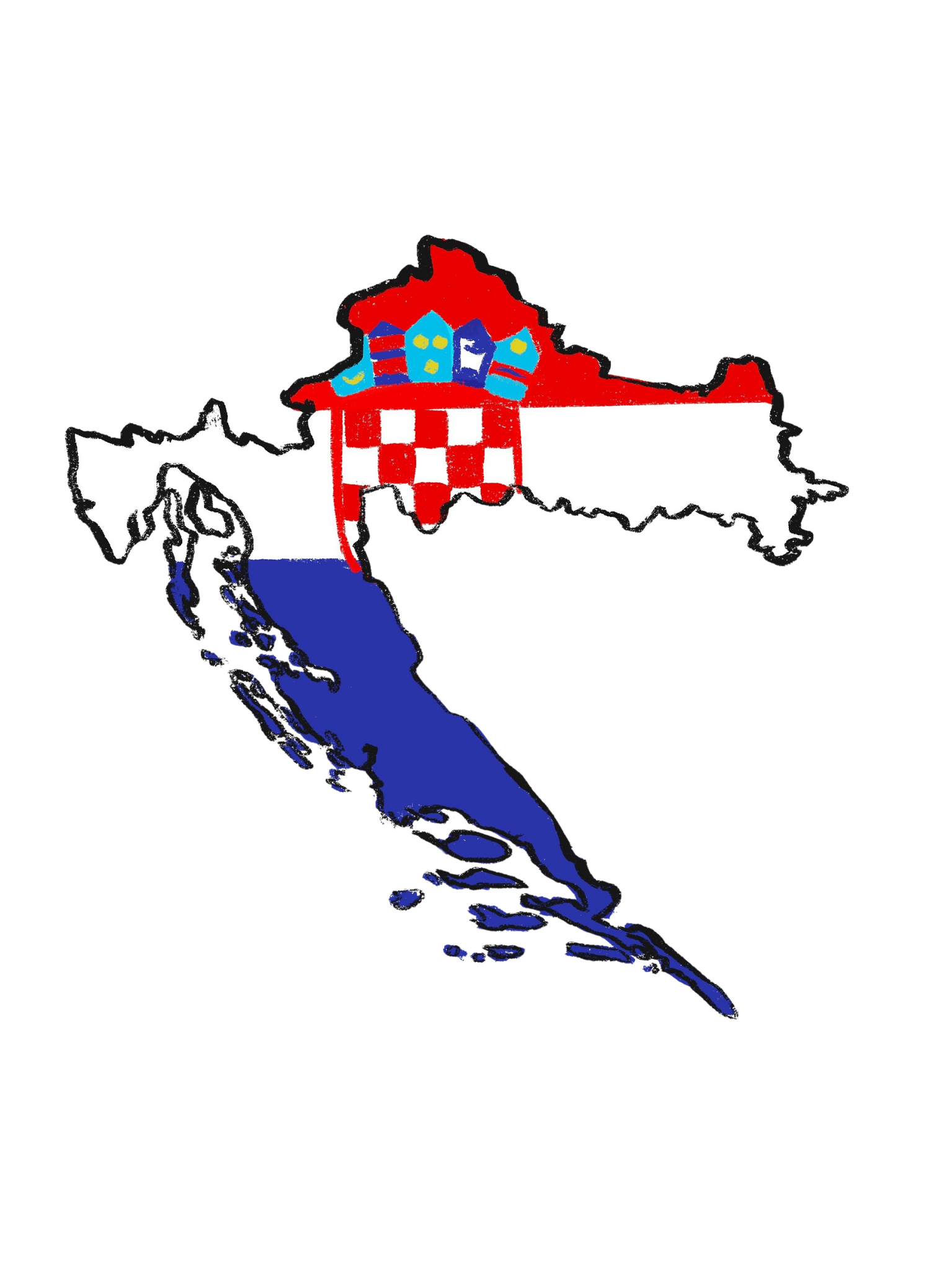
"Kako da ne" – Croatian
"It's supposed to be used sarcastically," said Megan Halsey, a native Croatian speaker, on the phrase kako da ne. On paper it means "How could I not," but Halsey said depending on tone it can either signify an enthusiastic "Duh!" or a pointed "Yeah, right." "Croatians are very witty and quick with a joke," Halsey said. "Teasing each other is just another way of saying I love you."

"द ेखो मगर प ्यार से" (Dekho magar pyar se) – Hindi
"I'm not sure how to translate it in a way that does it justice," said Aanya Sharma, a native Hindi speaker, on the meaning of the phrase "द ेखो मगर प ्यार से" (Dekho magar pyar se).
Broken down, she said it means "look, but with love." The phrase’s roots are in the cultural fear of the evil eye—the belief that a malicious gaze can bring real harm.
“It’s very telling about Indian culture because we are often afraid of the evil eye, which is basically when someone looks at you maliciously,” Sharma said. “So this phrase or saying tells people to look at others in a less judgmental or malicious manner and instead look at someone with kindness or love.”

"Bezugsperson" – German
"It's your most important person, or someone you go to for advice," Anna Bayly, a native and fluent German speaker, said about the word Bezugsperson.
It's a word made up of two parts: "bezug" meaning “relation” and "person" meaning, well, person. When you put it in English, though, relation- person doesn’t quite capture the same meaning the German phrase does. "My parents said it's someone you can trust," Bayly said. "The central idea is around trust.”